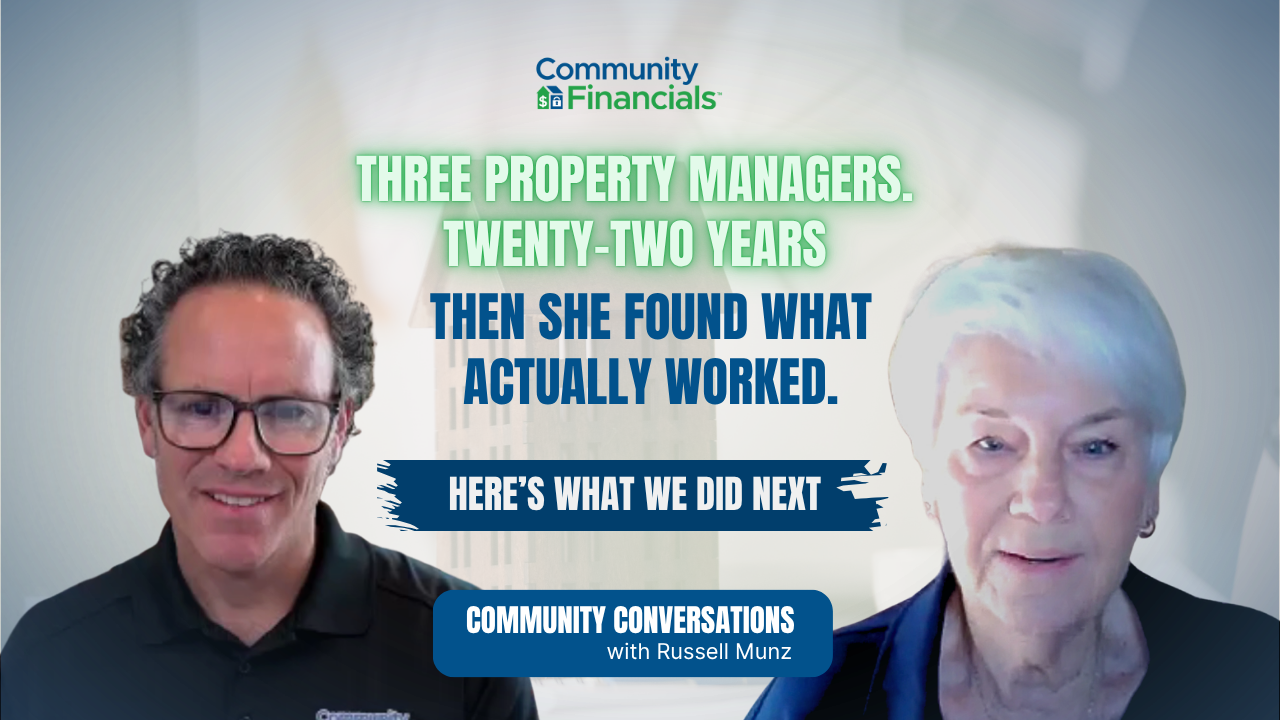
Three Property Managers. Twenty-Two Years. Then She Found What Actually Worked.
Gay Hawkins has been president of her 8-unit HOA in Riverside, California for about ten years. Before she became president, her community had already been through one full-service property management company. During her tenure, she went through two more. Three in total over 22 years. Each one taught the board something about what to look for and what to avoid.
The first company had record-keeping inconsistencies significant enough that the board took them to small claims court and won. The second came in at $150 a month, which sounded like a deal until the board realized they were getting exactly what they paid for: poor communication, no real help when problems arose, and staff that turned over so often the board spent more time getting new people up to speed than getting anything resolved. The third charged for every little thing until the cost became impossible to justify.
“We were spending too much money for really what we needed,” Gay says.
The Problem Nobody Talks About for Small HOAs
One detail of Gay’s situation reflects something a lot of small communities deal with quietly. In the entire Inland Empire, an area covering Riverside, San Bernardino, Corona, and Moreno Valley, Gay’s board could only find three property management companies willing to work with an 8-unit HOA. Most would not even return the call.
Small communities are often priced out or turned away by full-service management companies that prefer larger portfolios. The ones that do take small HOAs frequently charge rates that do not reflect the limited services the community actually needs, or they cut corners to make the economics work on their end.
What the Community Actually Needed
After years of frustration, Gay’s board took a step back and asked a straightforward question: what do we actually need help with?
The answer was the financial side. Accounting, financial reports, dues collection, budget preparation, and bill approval. Everything else, the vendors, the maintenance calls, the day-to-day physical issues, they were already handling themselves. They had direct relationships with their gardener, electrician, plumber, and tree trimmer. When a sprinkler broke, they called the gardener. They did not need a property manager in the middle of that conversation.
Once the board separated what they needed from what they had been paying for, the decision became straightforward. They moved to a self-managed model with Community Financials handling the accounting and financial reporting. The transition took about three to four days. The cost dropped to roughly one third of what they had been paying.
What Changed
Gay describes the difference in service as significant. Questions get answered the same day. The team is patient with basic questions, something Gay appreciates given that she came into the role as a music teacher with no accounting background. When she asked her client manager to explain exactly what each team member does, she received a clear, detailed response that same week.
“Communication is spot on, it’s timely, it’s comprehensive, it’s friendly, patient,” she says.
The two-person bill approval process was one of the features that resonated most with Gay’s board. After years of receiving financial statements three or four months late and not being sure what they were looking at, having clear monthly reports and direct oversight of every expenditure changed how the board felt about the finances entirely.
Gay has now recommended Community Financials to three other HOAs in Riverside.
What Small HOAs Should Be Asking
If your community is paying for full-service management but handling most of the physical work yourselves, it is worth asking whether the bundled model is actually the right fit. The questions worth considering are simple:
- What services from your current management company are you actually using?
- Are you getting timely, accurate financial reports every month?
- Could you handle the physical side yourselves and hand off only the accounting?
For smaller communities especially, separating the accounting from the physical management can deliver better service at a fraction of the cost. Community Financials works with communities of all sizes across the country, including small HOAs that other providers would not take on.
If your board would like to understand what that looks like for your community, that is a conversation worth having.
Schedule a consultation or call 833-CONDO-HOA.
Important Disclaimer: This post is for educational purposes only and does not constitute legal, tax, or financial advice. Always consult a qualified attorney and CPA for guidance specific to your community.