HOA Insurance Renewal: Start 90 Days Before Your Policy Expires
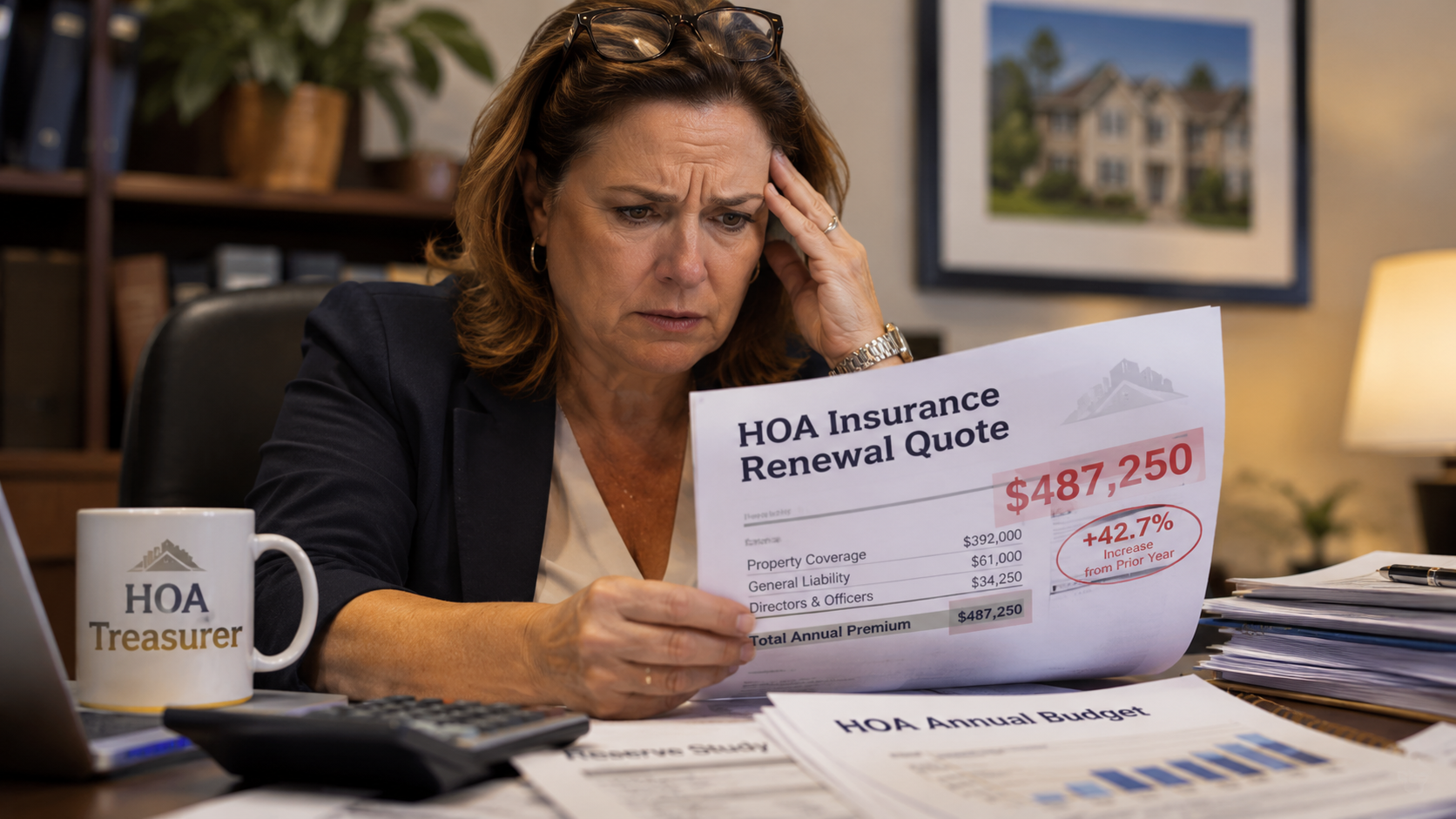
Insurance has been climbing, and a fixed community budget feels it. One of the biggest things boards can control is when they start preparing for renewal, and too many start too late.
I recommend putting a reminder on your calendar about 90 days before your HOA insurance policy expires. That gives your agent time to shop the policy, review coverage, and address anything that could affect your renewal.
Why Does the HOA Insurance Renewal Notice Come Too Late?
Insurance companies often send renewal notices about two weeks before the policy expires. By then, your board may have little time to shop around or respond to a significant premium increase.
That’s why I tell boards to put a reminder on the calendar about 90 days before the renewal date.
Your agent needs time to complete applications and take the policy to different underwriters. If you wait until the renewal notice arrives, you may be stuck with whatever is offered.
For a March 1 renewal, that 90-day reminder falls around December 1. If your renewal is sooner than that, call your agent this week.
What Should Your HOA Board Check Before Renewing Insurance?
Two things deserve particular attention: replacement costs and directors and officers insurance.
Replacement costs. Make sure your insured replacement values have kept up with inflation. Construction materials and labor cost more than they did a few years ago, and your coverage needs to reflect that. Your premium may rise a little as a result, but this is something your board needs to review with its agent.
Directors and officers (D&O) insurance. Many associations have a D&O rider added to their property policy. I don’t think that’s always the best approach.
A rider may not include the legal defense costs associated with a claim against the board.
Think about what happens if a homeowner sues the board. Your insurance may cover a particular claim but leave you responsible for the attorneys’ fees, depending on the policy.
That’s a bill nobody planned for in the budget. And a special assessment to pay attorneys is even less popular than the usual kind.
Ask your insurance agent whether your D&O coverage includes defense costs.
What Are Insurance Carrier Recommendations, and Why Do They Matter?
Look through your insurance renewal paperwork. Somewhere around pages three to five, you may find a section listing the carrier’s risk-reduction recommendations.
These can include replacing washing machine hoses, installing shutoff valves on hot water heaters, or adding drip pans.
Don’t treat that list as something you can put off until next year.
I tell boards that although insurers call them recommendations, they may effectively be requirements for keeping your coverage.
If you skip them the first year, you might face a large premium increase but still keep your policy. Ignore them again the following year, and the carrier may decide not to renew you.
That’s when things can get expensive.
An association that loses its standard coverage may end up in the excess lines market, which is not standard coverage for community associations.
I’ve warned boards that premiums in these situations can run two to four times what they were previously paying. That isn’t a fixed rate for every association, but it shows how costly losing your existing coverage can become.
Go through the carrier’s recommendations with your agent, confirm what the insurer expects, and assign a board member to make sure the work gets completed.
Don’t wait until the next renewal to discover that something from last year’s list was never addressed.
How Do You Budget for an Insurance Renewal You Haven’t Received Yet?
If your insurance policy runs until February, your board may be preparing its annual budget in November without knowing what the renewal will cost.
Your agent might not have a final figure until January.
So what do you do?
Ask your agent what percentage increases they’re seeing in recent renewals for other associations.
Even without a firm quote, an experienced agent should be able to give you some guidance based on what they’re seeing in the market.
Use that estimate when preparing your budget rather than assuming next year’s premium will be the same as this year’s.
Our post on building the 2027 budget from last year’s actuals explains why actual spending is a good starting point, but the numbers still need to reflect what is coming.
What Can Your HOA Do to Lower Insurance Costs?
Start by asking your insurance agent to get bids from alternative underwriters.
If your agent can’t or won’t explore other options, consider talking to another provider.
You should also understand what drives your community’s insurance premiums.
The age and type of construction matter. Wood-frame buildings may be treated differently from masonry buildings. The number of stories, wind exposure, loss history, and deductible can also affect pricing.
And wind exposure isn’t just a waterfront issue.
Claims matter, too. A series of losses can affect what insurers are willing to offer, so ask your agent how your association’s claims history is influencing its renewal.
Some communities also consider updating their declaration and bylaws to address responsibility for the master policy deductible when damage originates in an individual unit.
For example, an association may want the responsible owner’s insurance to bear an applicable deductible, where permitted by law and the governing documents.
That requires an amendment, so work with your attorney and insurance agent before making changes.
Why Should Your HOA Check Its Vendors’ Insurance?
Your association’s insurance isn’t the only coverage your board needs to think about.
What about the contractors working on your property?
Many boards ask for a certificate of insurance and stop once they see general liability coverage.
But what happens if that contractor doesn’t carry workers’ compensation insurance and one of their employees is seriously injured while working at your community?
Depending on the circumstances and applicable law, the association could face liability for the injury or medical expenses.
An uninsured contractor’s accident can become a financial problem for the association.
Before hiring a vendor, ask for a current certificate of insurance and check for general liability, commercial auto, and workers’ compensation coverage as appropriate for the work being performed.
Have your insurance agent review the certificate and verify that the coverage meets your association’s requirements.
You can also call the vendor’s insurance agent. Their name and contact information should be listed on the certificate.
The point is to find out whether the coverage is adequate before an accident happens, not afterward.
Your HOA Insurance Renewal Checklist
Before your next insurance policy expires, make sure your board can answer these questions:
- Have you put a reminder on the calendar about 90 days before renewal?
- Has your agent explored bids from alternative underwriters?
- Are your replacement values current, and does your D&O coverage include legal defense costs?
- Have you reviewed the carrier’s recommendations and assigned someone to complete them?
- Have you asked your agent what premium increase to expect and included that estimate in your budget?
- Do you understand how your construction, wind exposure, claims history, and deductible affect pricing?
- Have you checked your vendors’ insurance certificates for appropriate liability, commercial auto, and workers’ compensation coverage?
Insurance is one of those expenses that can throw a community’s budget off quickly.
You may not control what the insurance market does, but you can control when you start preparing, whether you follow through on the carrier’s recommendations, and how carefully you review your coverage.
Don’t wait until the renewal notice arrives to find out what your options are.
If your board would like help with the financial side of budgeting for 2027, schedule a consultation or call 833-CONDO-HOA.
Important Disclaimer: This post is for educational purposes only and does not constitute legal, tax, insurance, or financial advice. Always consult a licensed insurance agent, qualified attorney, and CPA for guidance specific to your community.