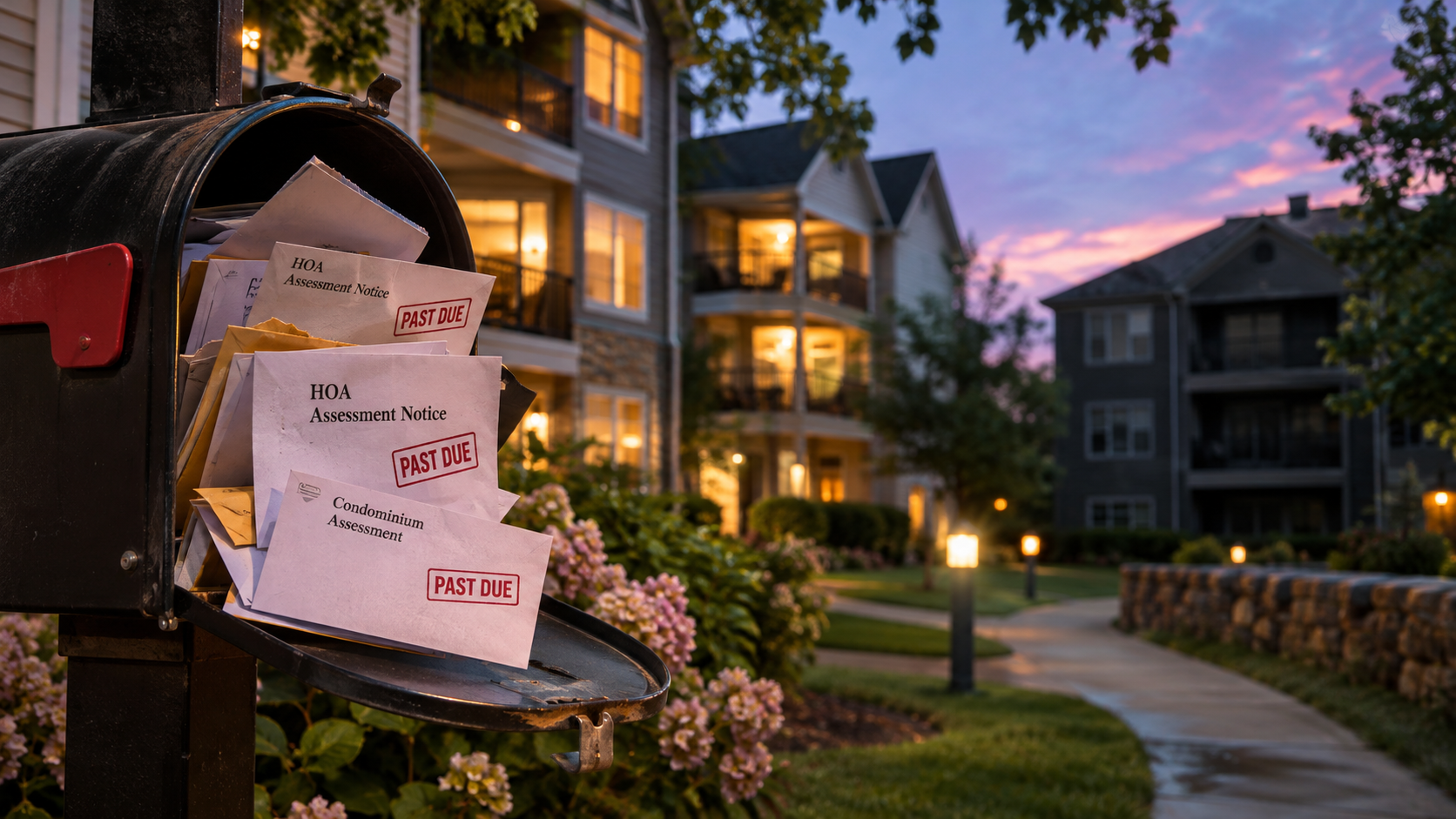
Money Owed Isn’t Money in the Bank: Check Your HOA Delinquencies Before Year-End
Boards often look at the bank balance and decide things are fine. The delinquency report may tell a different story.
Money owed isn’t money in the bank, and a budget that assumes every assessment will be collected on time can set the community up for a cash flow problem in the middle of the year.
Why Can a Healthy Bank Balance Be Misleading?
Your budget assumes a certain amount of assessment income will arrive every month. If homeowners aren’t paying, that money isn’t available to cover expenses, even if the unpaid assessments appear as receivables in your accounting records.
Because a board works within a budget, consistent assessment collections are essential to keeping the community’s finances on track.
I have seen communities where an owner went years without paying because nobody was watching the delinquency report and following through on the collection policy.
A healthy bank balance today doesn’t necessarily mean the association will have enough cash next month. That’s why boards need to look at their delinquency reports alongside their financial statements.
What Should Your HOA Board Check Before Year-End?
Pull your HOA delinquency report and answer three questions: How much is owed? How old is the debt? And is the collection policy being followed consistently?
Start with the aging report, which groups unpaid assessments according to how long they’ve been outstanding. This helps your board distinguish between a recently missed payment and an account that has remained unpaid for months.
Pay particular attention to accounts that are 60 or more days past due. That is a useful review point, although the required timing for notices, collection action, and legal referrals depends on your association’s governing documents and applicable state law.
The longer a delinquency goes unaddressed, the harder it may become to collect.
In some states, statutes of limitations restrict how long an association has to pursue legal action for unpaid assessments. Waiting too long could affect the association’s ability to recover older debts.
Ask your attorney which deadlines apply to your community and whether any accounts require immediate attention.
How Should Your HOA Budget Account for Late Payers?
Do not assume 100% collection. If you have historically collected 90%, budget for 90%. If some money consistently takes longer to collect or never arrives, consider a line for uncollectible common charges, something like 5% or 10% depending on your history. Budgeting for income you are not receiving is how a community ends up short midyear.
For the rest of the budget, our post on building the 2027 HOA budget from last year’s actuals shows where to start.
A Wall Street Journal report published in August 2026 showed what that can look like. At Fairview Condo 1 in New York, 15 of the community’s 202 units were behind on monthly dues, creating a shortfall of roughly $8,900 per month, more than the eight delinquencies the board typically budgets for.
That’s money the association cannot count on receiving when its regular expenses come due.
What Should an HOA Collection Policy Include?
An HOA collection policy should clearly explain what happens when an owner misses an assessment payment, including when notices are sent, which fees may apply, and when an account may be referred for further collection action.
For example, a policy might provide for a late fee after 15 days, a reminder notice after 30 days, and a review for referral to an attorney or collection agency after 60 days.
Those are examples, not universal deadlines. Your actual policy must follow state law and your governing documents, including any required notices, waiting periods, and opportunities to resolve the debt.
Apply authorized late fees and interest consistently, and make sure owners receive clear statements showing what they owe.
Then follow the same process for every owner.
Inconsistent enforcement can create disputes and claims of unfair treatment, particularly when one homeowner receives exceptions that aren’t offered to others in similar circumstances.
Timing matters, too. Some states give association assessment liens limited priority over certain other liens, and the amount protected by that priority can depend on a defined period of unpaid assessments.
That lien-priority period is not necessarily the same as the statute of limitations for collecting the underlying debt.
Your attorney should explain both rules and how they affect your association’s collection procedures.
What About Payment Plans and Ways to Pay?
Make paying assessments as straightforward as possible.
Offer online payments, continue accepting checks for owners who prefer them, and consider credit card payments where practical. Any processing fees passed on to owners should comply with applicable law, payment-provider rules, and the association’s governing documents.
When an owner requests a payment plan, the details matter.
In WSCAI’s Q3 2026 Community Associations Journal, attorney Asha Abdulle of Pody & McDonald identifies several factors boards should consider:
- The amount and age of the delinquency.
- Whether the proposed payments are realistic.
- The owner’s payment history.
- Any applicable statute of limitations.
- What happens if the owner defaults.
- Whether similar requests have been handled consistently.
As Abdulle explains, “A payment plan that the owner cannot maintain will not succeed.”
A payment plan should give the owner a realistic path toward becoming current while protecting the association’s ability to collect what is owed.
The goal is to recover the assessments while treating owners fairly and following a consistent, legally compliant process.
Your Year-End HOA Delinquency Check
Before closing the books, confirm five things:
- You have reviewed the delinquency report and know how much is owed and how long each balance has been outstanding.
- Every account 60 or more days past due has been reviewed, with appropriate action taken under your collection policy and applicable law.
- Your collection policy is in writing and applied consistently to every owner.
- Your 2027 budget reflects your real collection rate, not an assumption of 100%.
- You have confirmed the relevant collection deadlines, lien rules, and legal requirements with your attorney.
Your budget is built on the assumption that money is coming in. Your delinquency report tells you whether that is actually happening.
Before approving the numbers for another year, make sure the money you expect to collect matches what your association can realistically count on receiving.
If your board would like help reading its delinquency report before year-end, schedule a consultation or call 833-CONDO-HOA.
Important Disclaimer: This post is for educational purposes only and does not constitute legal, tax, or financial advice. Always consult a qualified attorney and CPA for guidance specific to your community.