Why Borrowing From Your HOA Reserves Is a Trap
It starts with the best of intentions. The operating budget runs short, a repair comes in over estimate, or the year just did not go as planned. The reserve fund is sitting there, the board knows the money is there, and someone suggests borrowing from it temporarily with a plan to pay it back later.
That plan rarely works out the way it is intended, and the communities that go down that path often find themselves in a deeper hole than the one they were trying to climb out of.
What Reserves Are Actually For
Reserve funds exist for one specific purpose: to pay for the major repairs and replacements that every community will eventually face. Roofs, pavement, elevators, structural components, pool equipment, and other long-lived assets that need to be replaced on a predictable schedule. The reserve fund is how a community prepares for those expenses over time rather than scrambling for money when they arrive.
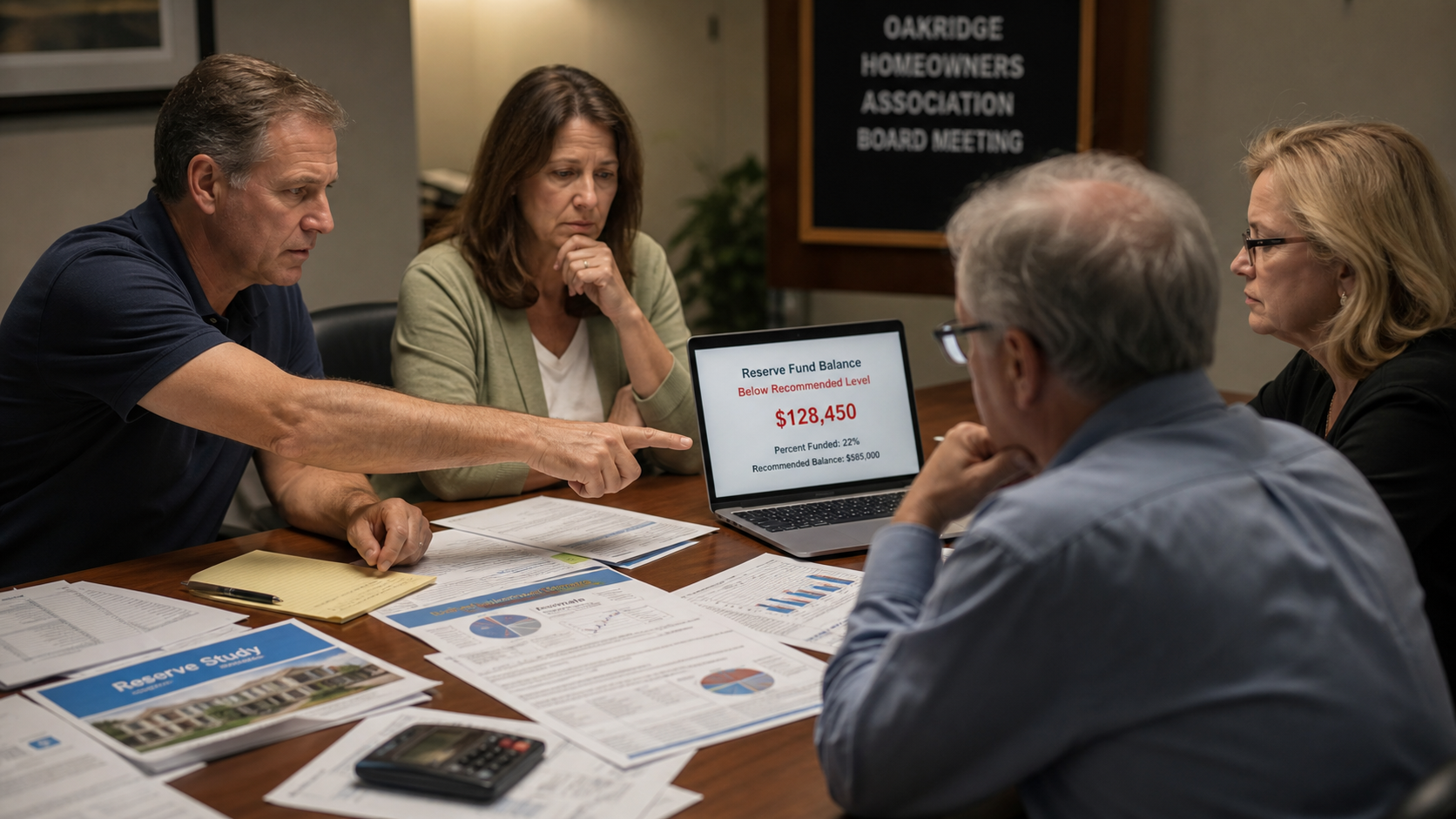
According to Association Reserves, which analyzed more than 100,000 reserve studies conducted between 1986 and 2025, approximately 74% of HOAs in the United States are currently underfunded, the highest rate the firm has ever recorded. That number reflects what happens when communities consistently treat reserves as optional, as a fallback, or as a source of short-term operating cash. The gap builds slowly, and by the time a major repair arrives the money simply is not there.
The Legal Dimension
Beyond the financial risk, borrowing from reserves carries legal exposure that boards often do not consider until something goes wrong. According to Davis-Stirling.com, California law requires that reserve accounts be kept in separate, distinct bank accounts, and boards may not spend reserve funds for any purpose other than the repair, restoration, replacement, or maintenance of major components the association is obligated to maintain. California is among the most specific on this point, but the principle applies broadly, and according to HOA Experts USA, improper reserve borrowing can expose boards to legal liability and homeowner disputes regardless of which state the association is in.
The intention to repay does not change the legal exposure. If the funds are used for operating expenses and something goes wrong before repayment happens, the board may find itself facing questions it cannot easily answer.
Why Repayment Almost Never Happens on Schedule
The repayment plan sounds reasonable when the borrow is approved. The board will put the money back next quarter, or at the start of the next fiscal year, or once a particular expense clears. What actually tends to happen is that the same budget pressures that led to the borrow in the first place do not go away, and repayment keeps getting deferred.
Meanwhile the reserve balance is lower than it should be, and the repair need that the reserves were set aside for is not getting any cheaper. Construction costs have remained elevated, and as ManageCasa notes, when a major repair lands and the reserves are not there the choices available are difficult: issue a special assessment, take out a loan, or defer the repair and accept the risk of compounding damage. Deferring the repair is rarely the end of the story. It usually makes the underlying problem worse and more expensive over time.
What Proper Reserve Funding Actually Looks Like
The alternative to borrowing is straightforward, even if it requires some discipline during budget season. Reserve contributions should be treated as a non-negotiable line item in the annual budget, funded from the operating surplus rather than treated as what is left over after everything else is paid. When the budget is built with realistic reserve contributions from the start, the fund grows steadily and the board never has to have the conversation about where the money is going to come from when a major repair arrives.
A reserve study helps boards understand exactly how much to set aside each year based on the age and condition of the community’s major components. Using that study as the foundation for annual reserve contributions is the most reliable way to stay on track and avoid the funding gaps that lead to borrowing in the first place.
That approach also removes the temptation to borrow in the first place. A board that is consistently underfunding reserves is always one bad year away from a crisis, while a board that treats reserve funding as part of normal operations is not.
As I tell boards consistently: putting money away with a surplus is the right approach. Borrowing from reserves and planning to pay it back later is how communities get themselves into more and more trouble. The repair need does not disappear just because the money was redirected. It waits.
If your board is not sure whether your reserves are adequately funded or whether your current financial reporting gives you the visibility to stay on track, that is a conversation worth having before the next major expense arrives.
Schedule a consultation or call 833-CONDO-HOA.
Important Disclaimer: This post is for educational purposes only and does not constitute legal, tax, or financial advice. State laws governing HOA reserve funds vary significantly. Always consult a qualified attorney and CPA for guidance specific to your community and state.